Most transport and EVS shifts start the same way. People clock in, grab a radio or a cart, and head out to the first request. By the time a supervisor learns that two elevators are down, a unit is holding three discharges, or a new isolation room opened overnight, the team has already been working around the problem for an hour.
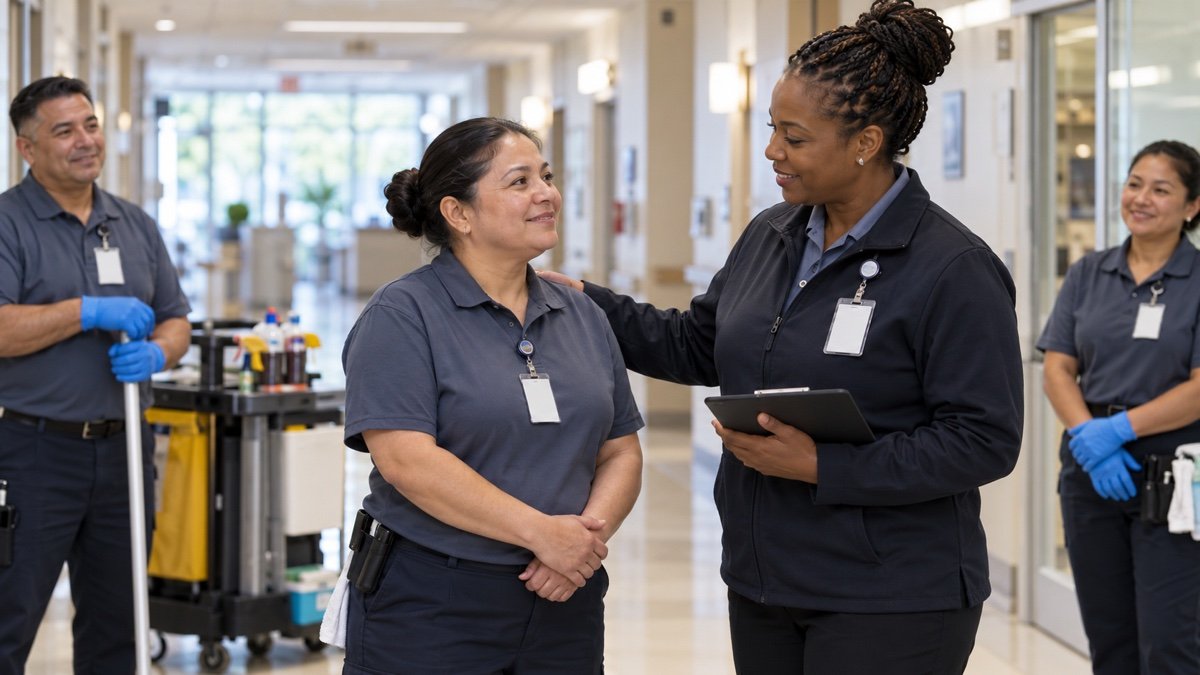
A short shift huddle fixes that. It gives everyone the same picture of the day before the first trip or the first room turn. It also gives frontline leaders a few minutes each shift to recognize good work, flag safety concerns, and hear from the people closest to the work. This article explains what a good huddle looks like for support services teams and how to make it a habit that lasts.
What a Huddle Is, and What It Is Not
A huddle is not a staff meeting. It is short, it happens at the same time every shift, and it focuses on what the team needs to know right now.
AHRQ's Patient Safety Network describes a huddle as “a short meeting involving interdisciplinary healthcare team members” that lasts “no more than 10-15 minutes,” in its primer on improving patient safety and team communication through daily huddles. The same primer makes an important point about purpose: the goal is “to share information and highlight concerns to be followed up,” not to solve issues.
That last idea matters for transport and EVS supervisors. A huddle that turns into a long problem-solving session will get skipped the first time the department is busy. Keep it short, write down anything that needs follow-up, and handle it after the team is on the floor.
Why Huddles Matter for Support Services
Huddles have a track record in patient care settings. The PSNet primer notes that huddles “have been shown to improve patient safety” in areas such as medication errors, poor hand hygiene, serious safety events, and near misses. Those are clinical examples, but the principle carries over: when a team shares what it knows at the start of a shift, fewer surprises reach the patient.
Transport and EVS teams have their own version of those surprises:
- A patient on a precaution that the transporter did not hear about.
- A floor that was waxed overnight and is still being buffed.
- A broken stretcher that keeps getting put back into service.
- A unit with a backlog of discharges that will need fast room turns after lunch.
Each of these is easy to share in thirty seconds. Each one can cost a lot of time, or create a safety risk, if no one mentions it.
A Simple Huddle Format
The best huddles follow the same order every time, so people know what to expect and the meeting stays short. A format that works well for transport and EVS teams:
- Safety first. Any safety concerns, near misses, or equipment problems from the last shift. Ask, “Did anyone see something that could have hurt a patient or a coworker?”
- Today's picture. Expected volume, known discharges, units that are full, isolation rooms, elevator or construction issues, and staffing gaps.
- One focus. A single reminder or skill for the day, such as confirming patient identity, checking wheelchair brakes, or following the room readiness checklist.
- Recognition. Name one person or one moment from the last shift that went well, and say why it mattered.
- Questions. Give the team a chance to raise anything the supervisor missed.
That is five items, and it should take about ten minutes. If the huddle runs long more than once or twice, cut the agenda rather than the meeting.
Tips for Supervisors Who Lead the Huddle
Hold it in the same place at the same time. A consistent spot, such as the dispatch office or the EVS break room, makes the huddle part of the routine instead of an extra task.
Include everyone who works the shift. Transporters, EVS technicians, dispatchers, and leads all see different parts of the hospital. If some staff start at staggered times, rotate who gives them the summary when they arrive.
Invite people to speak. The PSNet primer notes that the leader should invite every team member to contribute. Ask a specific person to share each day, especially newer staff who may not speak up on their own.
Write down follow-up items. Use a simple log or whiteboard. At the next huddle, close the loop on anything raised the day before. Teams stop sharing concerns when nothing happens after they speak.
Coordinate across departments. If transport and EVS hold separate huddles, have the leads share one or two key items with each other. A unit with five pending discharges is a transport issue and an EVS issue at the same time.
Connect Huddles to Training and Flow
Huddles are a natural place to reinforce training. A two-minute review of one skill each shift keeps standards fresh between formal competency checks. Hospitals that want experienced staff to lead that kind of teaching can prepare them through the Certified Healthcare Transporter Instructor (CHTI) program, so the person leading the huddle can also coach the skill on the floor.
Huddles also connect support services to the bigger picture of hospital flow. When supervisors know which units are holding discharges or waiting on clean rooms, they can move staff to where the need is before the backlog grows. The book When Beds Don't Move explains why transport and EVS sit at the center of patient flow, and a daily huddle is one of the simplest ways to act on that idea.
A Simple Place to Start
Pick one shift and try a ten-minute huddle every day for two weeks. Use the five-part format above and keep a short log of what the team raised. At the end of two weeks, ask the team what helped and what to drop. Then adjust the format and roll it out to the other shifts.
A good huddle costs ten minutes and pays back far more in safer trips, faster room turns, and a team that feels heard. Leaders who protect that time every shift build teams that know what is coming and are ready for it.
Sources
- AHRQ Patient Safety Network, "Improving Patient Safety and Team Communication through Daily Huddles": https://psnet.ahrq.gov/primer/improving-patient-safety-and-team-communication-through-daily-huddles
The Frontline Leadership Hub is published by Impact Training Company. These practical guides are intended for U.S. hospital leaders; local policies and clinical protocols take precedence.